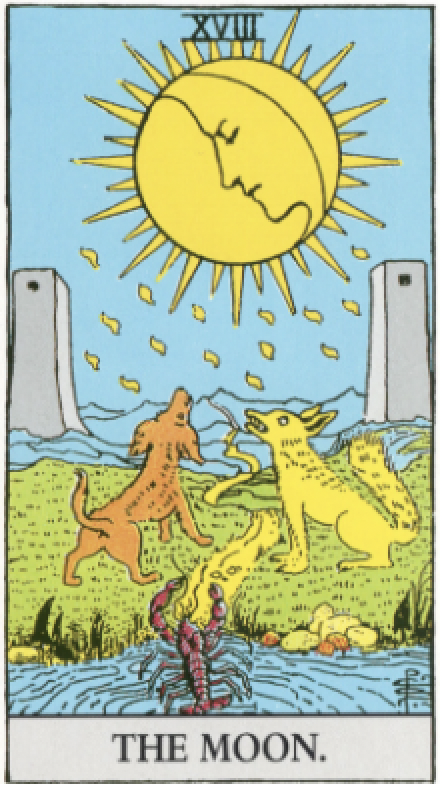
The Moon
You’re reacting to stories, not facts. Anxiety fills in the blanks with fear.
You keep the fear vague because a specific fear could be checked. Not asking keeps it livable.
What it looks like, by what you are asking about
You are reacting to a story about what your manager thinks. You have not checked it. The story is doing all the work.
What do you actually know about the situation, and what have you filled in?
Ask the direct question today. One sentence, to the person involved.
The dread about money is bigger than the number. You have not looked at the number recently, which is how the dread stays big.
What is the actual figure, and when did you last check it?
Look at the real number today. Write it next to the one you were imagining.
You are reading their silence as a verdict. It is a silence. Everything else is yours.
What have you decided they think, without them saying it?
Ask them one plain question today instead of interpreting.
You are deciding against a worst case you have not tested. Fear fills the blanks with the most vivid option, not the most likely.
What is the realistic bad outcome here, not the cinematic one?
Write the realistic version down today and decide against that instead.
Not every thought you have at 2 a.m. is a fact. Some are just tired.
Which fear from last night would you not take seriously at noon?
Verify one assumption today with real information, not more thinking.
You are imagining the audience's reaction so precisely that you have stopped making the thing. The reaction does not exist yet.
Whose imagined response are you writing for?
Make the next piece for one real person you can name, and show it to them.
The rest of the deck
- The Fool
- The Magician
- The High Priestess
- The Empress
- The Emperor
- The Hierophant
- The Lovers
- The Chariot
- Strength
- The Hermit
- Wheel of Fortune
- Justice
- The Hanged Man
- Death
- Temperance
- The Devil
- The Tower
- The Star
- The Sun
- Judgement
- The World
- Ace of Wands
- Two of Wands
- Three of Wands
- Four of Wands
- Five of Wands
- Six of Wands
- Seven of Wands
- Eight of Wands
- Nine of Wands
- Ten of Wands
- Page of Wands
- Knight of Wands
- Queen of Wands
- King of Wands
- Ace of Cups
- Two of Cups
- Three of Cups
- Four of Cups
- Five of Cups
- Six of Cups
- Seven of Cups
- Eight of Cups
- Nine of Cups
- Ten of Cups
- Page of Cups
- Knight of Cups
- Queen of Cups
- King of Cups
- Ace of Swords
- Two of Swords
- Three of Swords
- Four of Swords
- Five of Swords
- Six of Swords
- Seven of Swords
- Eight of Swords
- Nine of Swords
- Ten of Swords
- Page of Swords
- Knight of Swords
- Queen of Swords
- King of Swords
- Ace of Pentacles
- Two of Pentacles
- Three of Pentacles
- Four of Pentacles
- Five of Pentacles
- Six of Pentacles
- Seven of Pentacles
- Eight of Pentacles
- Nine of Pentacles
- Ten of Pentacles
- Page of Pentacles
- Knight of Pentacles
- Queen of Pentacles
- King of Pentacles